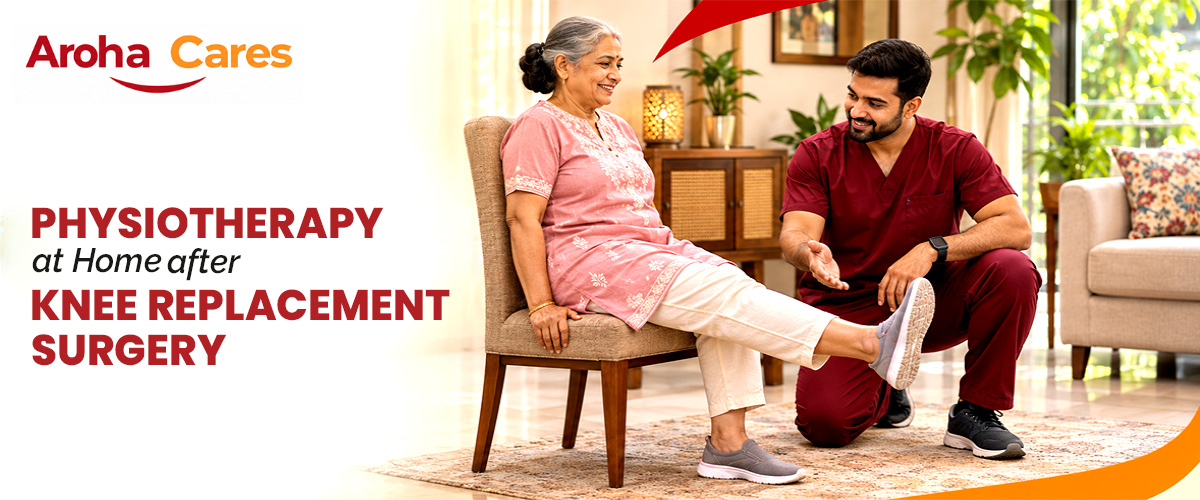
Physiotherapy at Home After Knee Replacement Surgery
Knee replacement surgery can reduce severe joint pain and help a person move better but surgery is only one part of recovery.
The weeks after the operation matter a lot. This is where physiotherapy after knee replacement becomes important.
Good knee replacement recovery at home needs safe movement, regular exercises, rest and proper support.
The goal is to slowly regain strength, balance and confidence.
Why Physiotherapy Is Important After Knee Replacement
After surgery, the knee may feel stiff, weak and sore. The muscles around the joint may also lose strength because the patient has been less active.
Physiotherapy after knee replacement helps improve movement, strength and daily function in a planned way. A physiotherapist may guide simple exercises, walking practice and safe ways to sit, stand or climb steps.
During knee replacement recovery at home, regular guidance can also help the patient understand what movements are safe.
When Can Home Physiotherapy Start?
The timing depends on the surgeon’s advice, the patient’s condition and how well the wound is healing.
Basic movement often starts soon after surgery. Once the patient returns home, the physiotherapist can continue the exercise plan.
Physiotherapy after knee replacement should always follow the medical advice given at discharge. Exercises may change as the knee becomes stronger.
A clear routine can make knee replacement recovery at home easier for both the patient and family.
What Happens During a Home Physiotherapy Session?
A home session may begin with a simple check of pain, swelling, movement and walking ability.
The physiotherapist may guide knee and leg exercises. They can also check how the patient stands, walks or uses a walker.
Physiotherapy after knee replacement is not about doing hard exercises from day one. Slow and steady progress is usually more useful.
Common Exercises After Knee Replacement
The exact exercises depend on the patient’s condition and the surgeon’s plan. A physiotherapist may guide movements such as:
- Ankle movements.
- Gentle knee bending and straightening.
- Thigh muscle tightening.
- Leg raises when safe.
- Sit to stand practice.
- Short walking practice with support.
These exercises can support knee replacement recovery at home but they should be done only as advised.
1. Walking Safely During Recovery
Walking is an important part of recovery but the patient should not rush.
A walker, crutches or a walking stick may be needed for some time. The physiotherapist can show how to use these aids safely.
During physiotherapy after knee replacement, walking distance may increase slowly as strength and balance improve.
For knee replacement recovery at home, floors should be clear of loose rugs, wires or anything that may cause a fall.
Managing Pain, Stiffness and Swelling
Some pain, stiffness and swelling are common after knee surgery. The care team may advise rest, leg elevation, cold packs or other simple steps.
The physiotherapist may also guide safe movements that help the knee stay active.
Physiotherapy after knee replacement can support better movement but the patient should not force the knee through severe pain.
Any sudden increase in swelling, redness, fever or wound problems should be reported to the medical team.
Building Strength Step by Step
Strength takes time to return.
The knee, hip and thigh muscles need regular work. Exercises may increase slowly as the patient improves.
This is why physiotherapy after knee replacement needs consistency. Doing the exercises correctly and regularly can support progress without putting extra strain on the joint.
Making the Home Safer for Recovery
A few simple changes can make recovery easier.
Keep the floor clear, use a supportive chair and keep useful items within easy reach.
A safe setup supports knee replacement recovery at home because it can lower the risk of falls and unnecessary strain.
Good lighting and a clear walking path can also make daily movement feel safer and more comfortable.
How Family Members Can Help
Family support can make recovery less stressful.
Family members can remind the patient about exercises, keep the walking area safe and help when needed.
Still, they should not create their own exercise plan. Physiotherapy after knee replacement should be guided by a trained professional who understands the surgery and the patient’s progress.
The aim is to support independence, not make the patient fully dependent on others.
How Long Does Knee Replacement Recovery Take?
There is no single recovery time for everyone.
Age, health, muscle strength, surgery type and regular rehabilitation can all affect progress.
For some people, knee replacement recovery at home may feel faster, while others may need more time. Small improvements, such as walking farther or bending the knee more comfortably, still matter.
Patients should focus on steady progress instead of comparing their recovery with someone else.
When Should You Contact the Doctor?
The patient should follow the warning signs explained by the surgeon or hospital.
Medical help may be needed for severe pain that suddenly gets worse, heavy swelling, fever, wound discharge, breathing trouble, chest pain or another major change.
Physiotherapy after knee replacement supports recovery but it does not replace medical follow up.
Why Home Physiotherapy Can Be Helpful
Travelling to a clinic soon after surgery can be tiring. Home sessions allow the patient to practise movements in the same place where daily life happens.
This can make knee replacement recovery at home more practical. The physiotherapist can also see the patient’s walking space, stairs and home setup.
This can help the therapist suggest changes that fit the patient’s actual daily routine.
Conclusion
Recovery after knee replacement needs patience, regular movement and the right guidance. The patient should follow the exercise plan, use walking aids correctly and keep the home safe. A steady routine can make knee replacement recovery at home easier and more comfortable.
If you, your family or relatives are looking for physiotherapy at home Gurgaon, Aroha Cares can support rehabilitation based on the patient’s condition, doctor’s advice and recovery goals.
The focus should always be safe progress, regular follow up and helping the patient return to daily activities with more confidence.
