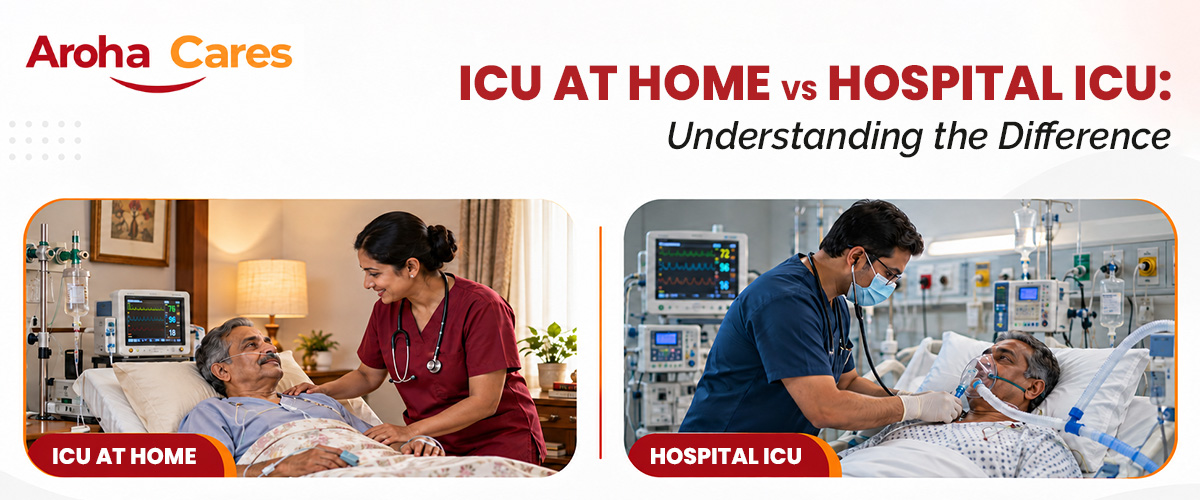
ICU at Home vs Hospital ICU: Understanding the Difference
Serious illness can make families face difficult choices about where a patient should receive intensive care. A hospital ICU gives access to a full medical team and emergency support. In some cases, ICU setup at home services may be considered when a patient is stable enough to continue advanced care at home.
Understanding ICU at home vs hospital ICU can help families discuss the right option with the doctor. The choice depends on the patient’s condition, risk and need for emergency support.
What Is a Hospital ICU?
A hospital intensive care unit is made for patients who need close monitoring and fast medical action. Doctors, nurses and other specialists are available around the clock.
When comparing ICU at home vs hospital ICU the hospital setting is usually better suited to patients who are unstable, need frequent tests or may require emergency procedures without delay.
The biggest advantage is simple. Everything is available in one place, from doctors and nurses to tests, equipment and emergency treatment.
What Is an ICU at Home?
Home ICU care brings selected intensive support into the patient’s home. Medical equipment, nursing support, monitoring devices, oxygen support and other care may be arranged depending on the patient’s condition.
The goal is to support patients who still need close care but no longer need everything a hospital ICU provides.
ICU setup at home services may therefore be considered only when the treating team feels home care is medically suitable.
Comfort matters but safety comes first.
Differences Between Home ICU and Hospital ICU
The main difference is the level and speed of medical support available.
| Factor | ICU at Home | Hospital ICU |
|---|---|---|
| Medical setting | Patient stays at home | Patient stays in hospital |
| Emergency response | Limited compared with hospital | Immediate emergency support |
| Monitoring | Based on home equipment and nursing plan | Continuous hospital level monitoring |
| Family presence | Usually easier and more flexible | May depend on hospital rules |
| Comfort | Familiar home surroundings | Clinical environment |
| Tests and procedures | Limited and may require outside visits | Available more quickly in hospital |
| Best suited for | Stable patients needing continued care | Unstable or high risk patients |
This table makes the ICU at home vs hospital ICU difference easier to understand. Both have a role but they are not meant for the same type of patient.
When Can Home ICU Care Be Considered?
Not every patient can be managed at home.
In some cases, a doctor may feel that the patient is stable enough to leave the hospital but still needs skilled nursing care or regular monitoring.
ICU setup at home services may be considered during long recovery periods, after hospital discharge or when a patient needs continued medical support at home.
Some situations where home ICU care may be discussed include:
- The patient is medically stable but still needs regular monitoring.
- Long term nursing support is required.
- The patient needs oxygen or other medical equipment at home.
- Recovery may take time and hospital admission is no longer essential.
- The family can support the care plan and emergency arrangements.
The final decision should always come from the medical team.
Comfort and Familiar Surroundings
Home can feel calmer than a hospital. Familiar rooms and family members may help some patients feel more relaxed.
Still, comfort should not replace medical safety. In the ICU at home vs hospital ICU decision, families need to know whether the patient can safely stay away from immediate hospital support.
For long term recovery, familiar surroundings may make everyday care feel less stressful. However, every patient's needs are different.
Access to Emergency Care
This is one of the biggest differences.
In a hospital ICU, doctors and emergency teams can respond quickly if the patient’s condition changes.
ICU setup at home services can provide monitoring and skilled care but a home cannot offer every hospital resource.
When thinking about ICU at home vs hospital ICU, families should ask what would happen if the patient suddenly became worse.
A clear emergency plan and quick access to a hospital are very important.
Medical Equipment and Monitoring
Depending on the care plan, ICU setup at home services may involve oxygen equipment, a hospital style bed, monitors, suction support or other medical devices.
The equipment needed will depend on the patient and the treatment plan.
In the ICU at home vs hospital ICU comparison, hospitals generally have a wider range of medical equipment and immediate access to tests and procedures.
This difference becomes especially important when the patient's condition can change quickly.
Nursing and Caregiver Support
Home ICU care often needs trained nursing support.
ICU setup at home services should be organised with clear instructions about medicines, monitoring, hygiene, feeding, mobility and emergency situations.
At home, communication between the family, nurse, doctor and service provider becomes especially important.
When families compare ICU at home vs hospital ICU they should also think about how much professional support the patient needs during the day and night.
Cost and Long Term Care
Cost can be an important concern, especially when intensive care continues for weeks or longer. ICU setup at home services can have a very different cost structure from hospital care.
The total amount may depend on equipment, nursing hours, medicines, doctor visits and the type of support required.
Home care should not automatically be seen as the cheaper option. Families should ask for a clear estimate and understand what is included.
The decision should still be based first on medical need and safety.
Family Involvement
Family members are usually more involved in everyday care at home.
This can feel reassuring but families still need to understand warning signs, medicine schedules and whom to contact if something changes.
Important things families should know include:
- Who to call during an emergency.
- Which symptoms need immediate medical attention.
- How medicines should be given.
- How equipment should be handled.
- When the patient should be taken back to the hospital.
Good ICU setup at home services should include clear communication and guidance for caregivers.
In the ICU at home vs hospital ICU decision, families should also consider whether they can manage the practical and emotional side of home based care.
Which Option May Be Better?
A hospital ICU is usually better for unstable or high risk patients who may need rapid tests or emergency treatment.
Home ICU care may suit medically stable patients who still need advanced support and close monitoring.
The right choice is different for every patient, which is why ICU at home vs hospital ICU should be discussed with the treating doctor.
There is no one size fits all answer.
How to Make the Right Decision
Talk openly with the treating doctor and understand what the patient actually needs.
Ask what equipment is required, how much nursing support is needed and what to do during an emergency.
If ICU setup at home services are being considered the home should also have enough space, a reliable power supply, clean surroundings and easy access for caregivers.
A careful ICU at home vs hospital ICU discussion can help families balance safety, comfort and practical needs.
Conclusion
There is no single option that is right for every patient. A hospital ICU is important when someone needs immediate emergency care, frequent tests or constant specialist support.
Home ICU care may be suitable for some stable patients who still need close monitoring and professional care.
Anyone who is considering ICU setup at home services should always make the decision with the treating doctor and understand the limits of home based care.
If you are looking for an ICU setup at home in Gurgaon, Aroha Cares can support families with organised home healthcare based on the patient's care plan and medical needs.
