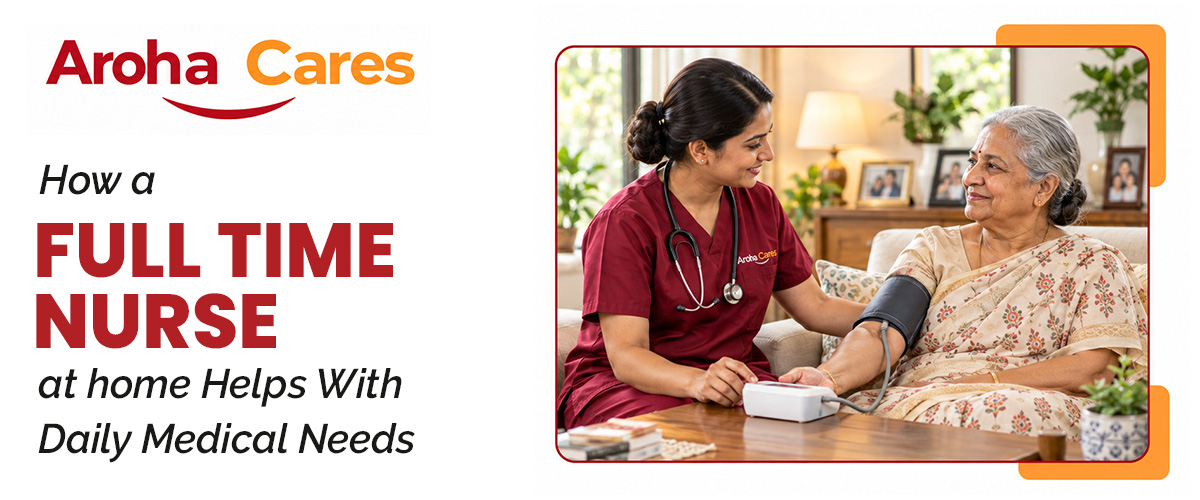
How a Full Time Nurse at Home Helps With Daily Medical Needs
When someone in the family is elderly, recovering from surgery or living with a long term health problem they may need regular support. Family members often want to help but managing medicines, health checks, hygiene and other daily needs can become difficult.
A Full time nurse at home can make daily care more organised. The patient receives regular support while staying in a familiar and comfortable place. It can also reduce pressure on family members who may not have the time or training to manage every medical need.
Here are some important ways full time nursing support can help.
How a Full Time Nurse at Home Helps Families Manage Medical Needs
1. Helps With Medicines and Timings
Patients may need several medicines at different times of the day. Missing a dose or taking medicine at the wrong time can affect the treatment plan.
A Full time nurse at home can help follow the medicine schedule given by the doctor. The nurse can remind the patient about medicines and help keep the routine organised.
This can be especially useful for elderly people who may forget timings or patients recovering from a serious illness.
2. Supports Regular Health Monitoring
Some patients need regular checks for blood pressure, temperature, pulse, oxygen level or blood sugar.
With a Full time nurse at home these basic health signs can be checked as advised by the doctor. The nurse can keep a simple record and inform the family if there is an unusual change.
Regular monitoring can help families notice problems early and contact the doctor when needed.
3. Helps With Wound and Dressing Care
Patients recovering from surgery, injury or certain medical treatments may have wounds that need regular attention.
A Full time nurse at home can help with dressing changes and wound care according to medical instructions. The nurse can also watch for warning signs such as unusual redness, swelling, discharge or increasing pain.
Proper wound care can make the recovery routine easier and help keep the patient comfortable.
4. Supports Safe Movement
Weakness, surgery, age or a long illness can make moving around difficult. Even getting out of bed or going to the washroom may require help.
A Full time nurse at home can support the patient while walking, changing position or moving from the bed to a chair. If a walker, wheelchair or another support device has been advised the nurse can also help the patient use it safely.
This kind of support can reduce the risk of falls and make daily movement less stressful.
5. Helps With Personal Hygiene
Daily activities such as bathing, dressing, oral care and using the washroom may become difficult when someone is weak or has limited movement.
A Full time nurse at home can assist with personal hygiene while respecting the patient’s privacy and dignity.
Good hygiene is not only about feeling fresh. It can also help protect the skin and reduce the risk of certain infections. This support can be particularly helpful for older adults and patients who need help with most daily activities.
6. Supports Meals and Hydration
Food and water play an important role in recovery and everyday health. However, some patients may have a poor appetite, feel too weak to eat alone or need a special diet.
A Full time nurse at home can support regular meals and fluids according to the patient’s care plan. The nurse can also notice problems such as difficulty swallowing, poor appetite or signs of dehydration and inform the family.
Any special diet or feeding instructions should always be followed according to medical advice.
7. Helps Manage Medical Equipment
Some patients may need medical equipment at home, such as oxygen support, nebulizers, feeding tubes, suction machines or other devices.
A trained nurse can help manage suitable equipment according to the doctor’s instructions. They can also check basic equipment regularly and help keep the care routine organised.
The exact type of nursing support will depend on the patient's condition and the equipment being used.
8. Makes Long Term Care More Manageable
Long term caregiving can become tiring for families. A patient may need help throughout the day, while family members also have work, children and other responsibilities.
Regular nursing support can create a more structured routine. The nurse can manage agreed medical and personal care tasks, while family members can focus more on spending meaningful time with their loved one.
It also gives the patient a familiar person who understands their daily routine and care needs.
When Can Full Time Nursing Support Be Helpful?
Families may consider regular nursing support when:
- The patient needs medicines several times a day.
- Regular health monitoring is required.
- The patient has difficulty walking or moving.
- Wound or dressing care is needed.
- The patient is recovering after surgery.
- Help with feeding or personal hygiene is required.
- Medical equipment is being used at home.
- An elderly person needs regular supervision.
- Family caregivers cannot provide constant support.
The level of nursing care should always match the patient's health condition and medical advice.
What Should Families Check Before Choosing a Nurse?
Before arranging full time nursing care, families should look at a few important points:
- Check the nurse's training and experience.
- Explain the patient's medical and daily needs clearly.
- Understand what duties the nurse will handle.
- Ask how emergencies will be managed.
- Make sure regular family updates are provided.
- Check whether backup support is available.
- Make sure the patient feels comfortable with the nurse.
Clear communication between the patient, family, nurse and doctor can make care much smoother.
Conclusion
A Full time nurse at home can support medicines, health monitoring, wound care, mobility, hygiene, meals, medical equipment and other everyday needs. This can be especially useful for elderly people, recovering patients and those who need long term medical attention.
For families searching for the best home nursing services, Aroha Cares can provide support based on the patient's daily needs, medical instructions and comfort.
The right nursing care can reduce pressure on family members while helping the patient receive regular and respectful support at home.
