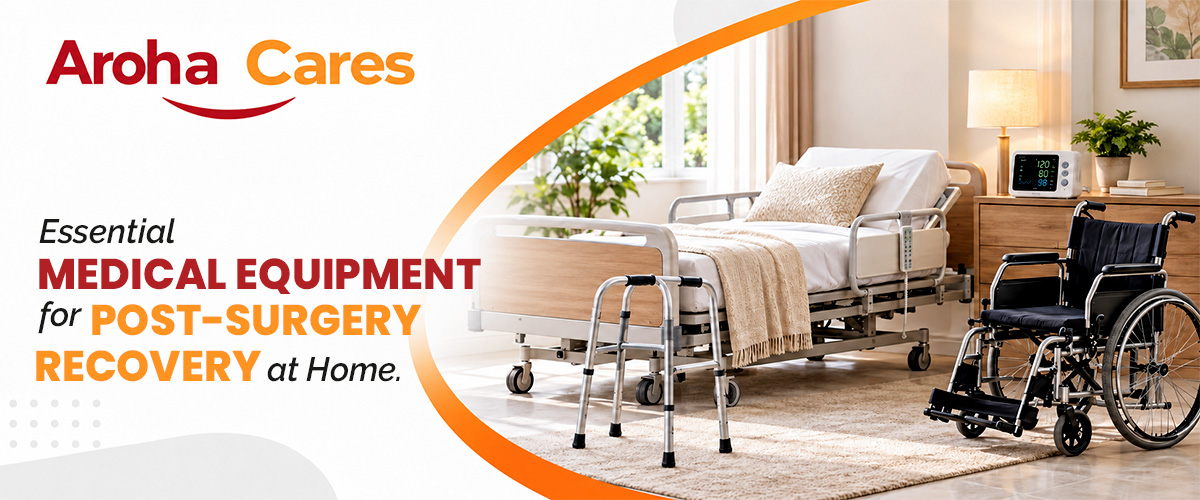
Essential Medical Equipment for Post-Surgery Recovery at Home
Coming home after surgery can feel like a relief but recovery does not end when you leave the hospital.
For many patients the first few days or weeks at home need careful planning. Movement may be limited, pain can make simple tasks harder and some patients may still need regular monitoring.
Having the right affordable medical equipment at home can make daily care easier and safer. At the same time, choosing the correct hospital equipment for home recovery can help patients rest properly, move with support and follow the recovery plan suggested by their doctor.
The equipment needed will depend on the type of surgery, age, mobility and overall health of the patient.
Medical Equipment You May Need After Surgery at Home
1. Hospital Bed for Better Rest and Positioning
A normal bed may not always be comfortable after major surgery.
An adjustable hospital bed can make it easier to raise the head, change sleeping positions or help the patient sit up without putting too much pressure on the body. It can also make caregiving easier when the patient needs help with meals, medicines or personal care.
For longer recovery periods, a hospital bed is one of the most useful forms of hospital equipment for home recovery.
Families looking for affordable medical equipment can also check whether renting a bed makes more sense than buying one, especially when it is only needed for a few weeks.
2. Wheelchair and Walking Support
Walking may be difficult after surgery, especially after procedures involving the legs, hips, spine or abdomen.
Mobility support may include:
- A wheelchair for longer movement.
- A walker for added balance.
- Crutches when advised by the doctor.
- A walking stick for lighter support.
- Transfer support for getting in and out of bed.
These tools can make hospital equipment for home recovery much more practical because they reduce the need for the patient to depend completely on another person.
Choosing affordable medical equipment also allows families to arrange the right support without buying items that may only be required for a short period.
3. Bathroom Safety Equipment
The bathroom is one place where extra care is often needed.
Wet floors and limited movement can increase the chance of slipping. A patient who normally moves around without help may still feel weak during the early days after surgery.
Simple bathroom equipment can include a shower chair, raised toilet seat, bedside commode or grab support.
When selecting hospital equipment for home recovery, bathroom safety should not be ignored. Small changes can make daily routines much easier.
Good affordable medical equipment does not always mean complex machines. Sometimes a simple support tool can make the biggest difference.
4. Oxygen and Breathing Support When Prescribed
Some patients may need oxygen or breathing support after discharge. This should only be arranged when recommended by the treating doctor.
Depending on the patient's needs, equipment may include an oxygen concentrator, oxygen cylinder or nebuliser.
This type of hospital equipment for home recovery needs to be used correctly, so families should understand the doctor's instructions and basic safety rules.
When looking for affordable medical equipment, cost should never come before reliability, especially for devices linked directly to breathing or oxygen support.
5. Basic Monitoring Devices
Not every recovery requires advanced monitoring but doctors may ask some patients to keep an eye on basic health signs.
Common devices may include:
- Digital thermometer.
- Blood pressure monitor.
- Pulse oximeter.
- Blood glucose monitor when needed.
- Weighing scale for certain recovery plans.
Having these devices can help families record information and share it with the doctor during follow up appointments.
For patients who need closer observation, this kind of hospital equipment for home recovery can be useful between medical visits.
It is also possible to find affordable medical equipment for basic monitoring but families should choose trusted devices and learn how to use them correctly.
6. Bedside Commode and Patient Care Accessories
Walking to the bathroom several times a day may be difficult for someone recovering from surgery.
A bedside commode can be useful when movement is very limited. Other accessories such as bed tables, back supports, waterproof sheets and pressure relief cushions may also make daily care easier.
These items are often simple but they can reduce physical strain for both the patient and caregiver.
For short term recovery, families do not always need to purchase every item. Looking for affordable medical equipment through flexible rental or short term arrangements may be more practical.
7. Suction Machines and Other Special Equipment
Certain surgeries or health conditions may require more specialised support at home.
For example, some patients may need suction machines, feeding support, special mattresses or other devices recommended by their medical team.
Such hospital equipment for home recovery should never be chosen simply because it seems useful. The doctor or trained care professional should first confirm whether the patient actually needs it.
Extra equipment without proper guidance can make home care more confusing rather than helpful.
Prepare the Home Before the Patient Returns
It is much easier to organise the home before discharge than to fix everything after the patient arrives.
Try to keep the recovery area simple and easy to move around.
Make sure:
- The patient's bed is easy to reach.
- Walking paths are free from loose rugs and wires.
- Medicines and basic supplies are kept nearby.
- The bathroom is easy to access.
- Emergency contact numbers are clearly available.
Proper placement of hospital equipment for home recovery is just as important as having the equipment itself.
A little planning can save a lot of stress later.
Should You Buy or Rent Medical Equipment?
This depends on how long the equipment will be needed.
If a walker or hospital bed is required for only a few weeks, renting may be more sensible. For equipment that may be used for months or years, buying could be the better choice.
When comparing affordable medical equipment, families should consider quality, cleaning, maintenance, delivery, installation and support rather than looking only at the price.
The right choice should make recovery easier without creating unnecessary expense.
Choose Equipment Based on Medical Advice
Every surgery is different.
A patient recovering from knee surgery will have different needs from someone recovering after heart, abdominal or spinal surgery.
Before arranging hospital equipment for home recovery, speak with the treating doctor or healthcare professional. Ask what is essential, what is optional and how long each item may be required.
This also prevents families from spending money on equipment that the patient may never use.
Conclusion
A smooth recovery at home often depends on good planning. A hospital bed, mobility support, bathroom aids, monitoring devices and other affordable medical equipment can make everyday care more comfortable when they are chosen according to the patient's actual needs.
The right hospital equipment for home recovery should support safety, movement, rest and medical care without making the home feel complicated.
If you are looking only for certain devices for a short period, choosing medical equipment on rent can also be a practical option.
Aroha Cares can support families in arranging suitable home care equipment based on the patient's recovery needs and care plan.
